Assistant Visiting Scientist Lerner College of Medicine
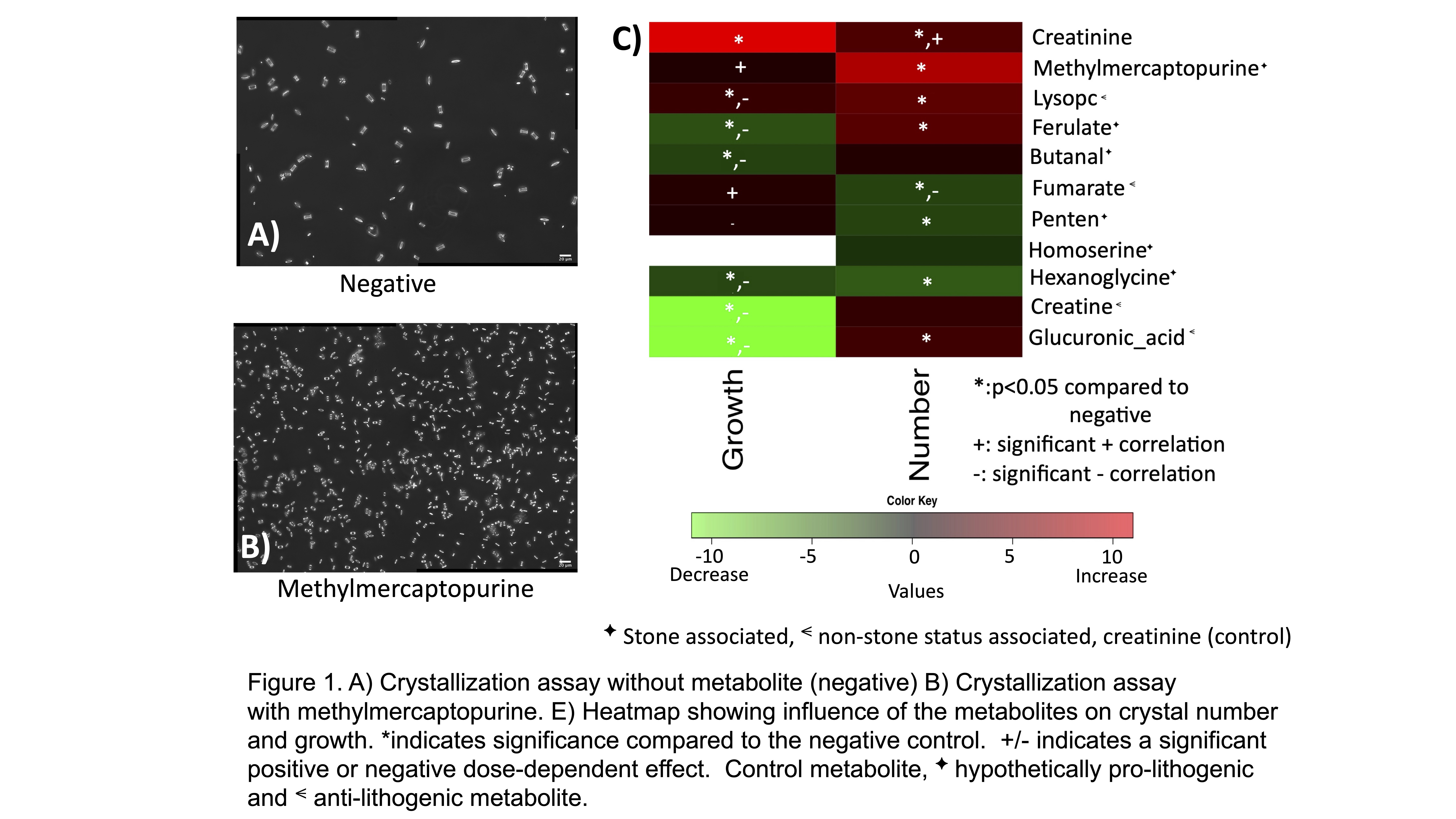
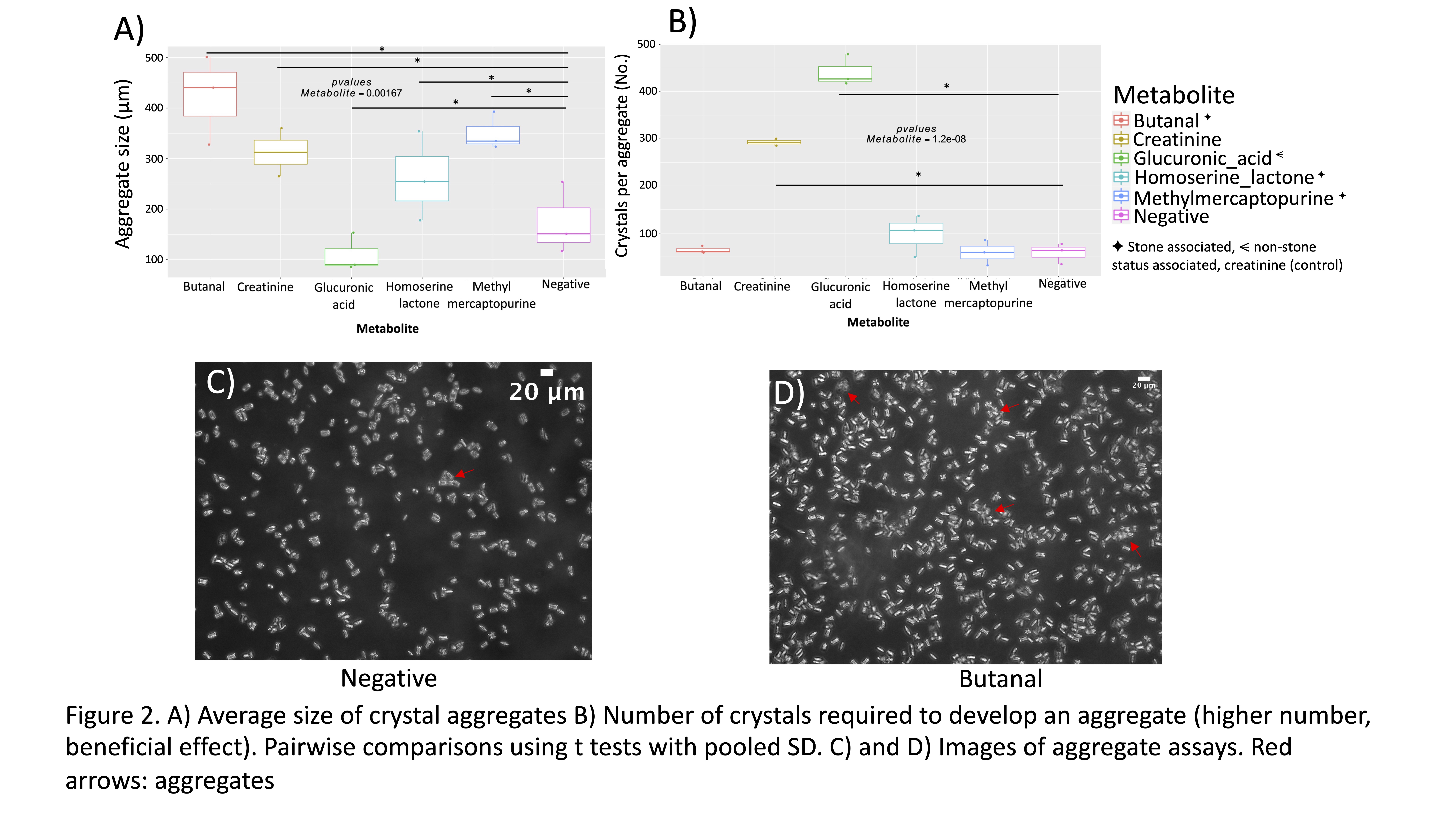
Introduction: Metabolomic characterization of the urine of active stone formers, healthy individuals, or non-active stone formers have revealed the presence of a set of differentially enriched biomolecules. We aimed to determine if these metabolites have a potential influence on lithogenesis with an in vitro approach. Methods: A panel of 15 small molecules highlighted in previous studies that involved metabolomic characterization of urine specimens were purchased as lab grade chemicals. Eight of these were associated with stone activity, and seven with healthy or non-recurrent status. Four metrics of lithogenesis were assessed: crystal number, growth, aggregation, and crystal polymorphism. Assays were run in a basic Tris-HCL buffer at room temperature. 2-ml of 1 mM sodium oxalate and 2 ml of 10 mM calcium chloride were combined in 50mm Petri dish, with the addition of the target metabolite at 0 hours for crystallization, and at 60 minutes for crystal growth. Aggregation was assessed with the use of 1 µg of previously harvested crystals added to 4 ml of basic buffer, as a 1-hour reaction in a plate shaker at low speed. Samples were imaged with an inverted microscope and compared to a negative control. Results were quantified and compared with one-way Anova and post hoc t-tests. Results: Effect of the metabolites on crystal metrics are presented in figures 1 and 2. We observed a clear relationship between the lithogenesis metrics and the presence of the metabolites. Results indicate that the small molecules influence lithogenesis at the molecular level, or crystal development. At the supramolecular or crystal level, stone-associated metabolites increased calcium oxalate aggregation, while healthy-associated metabolites inhibited aggregation and altered crystal morphology. Conclusions: Our findings provide in vitro evidence of the effects of urinary small molecules derived from patients with urinary stones and healthy counterparts, with clear effects at the crystal level. SOURCE OF Funding: UCF Research Scholar Award/Lerner Research Institute