Tohoku Medical and Pharmaceutical University. School of Medicine
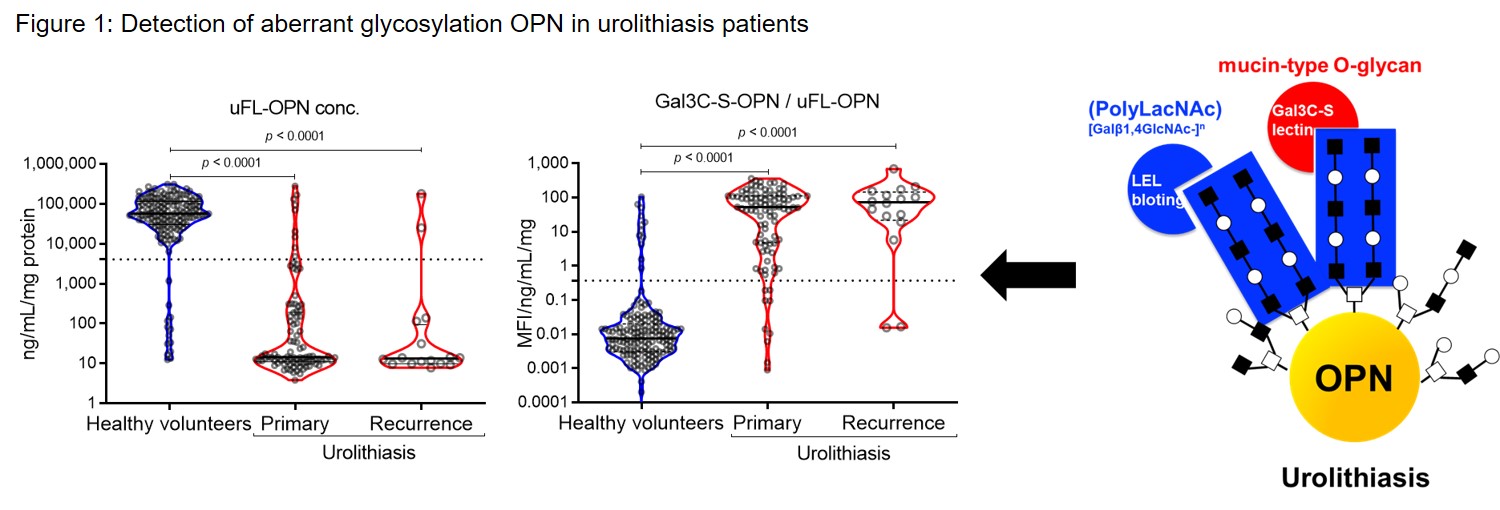
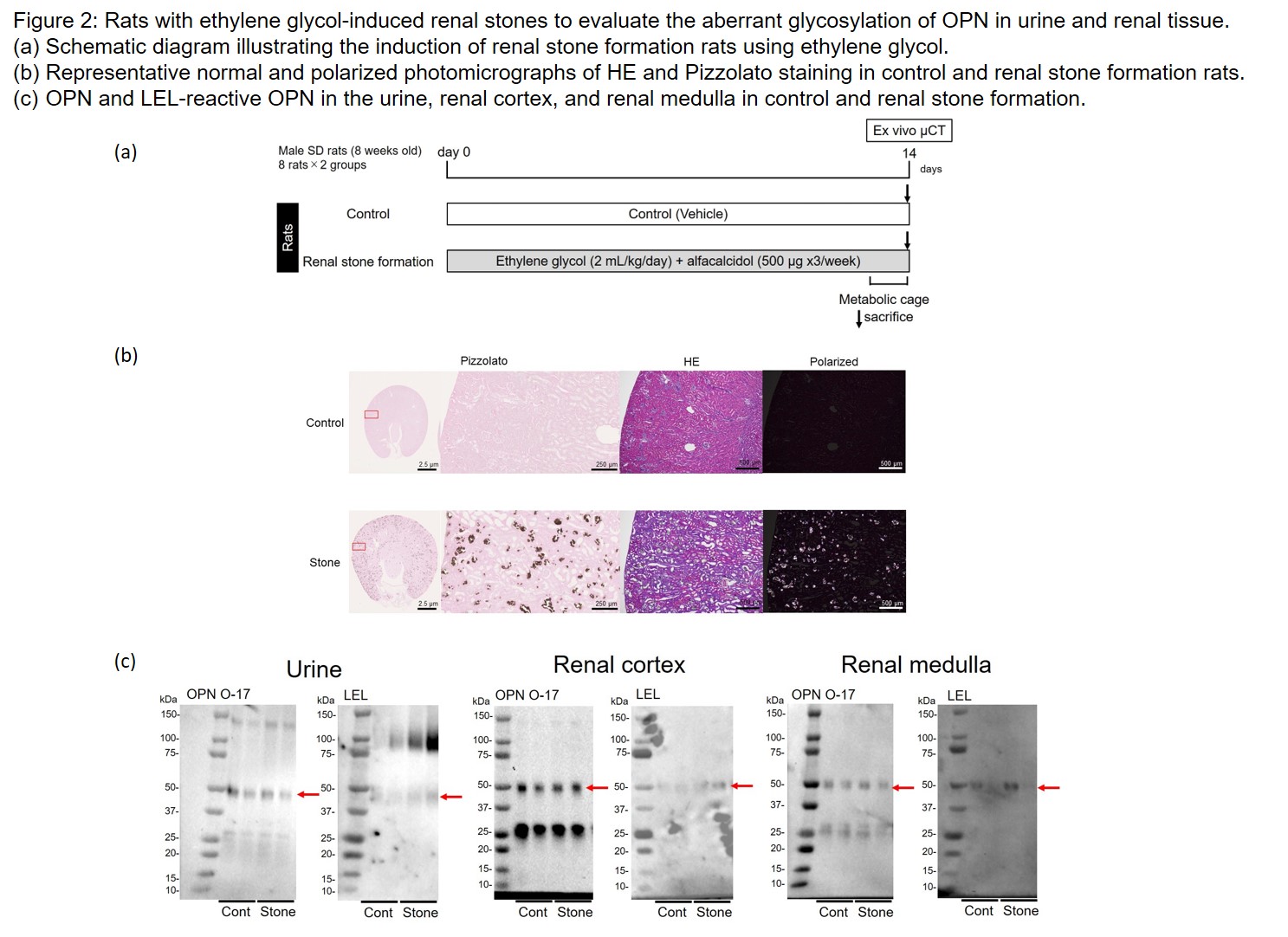
Introduction: Osteopontin (OPN) is one of the most important components in the calcium stone matrix. However, the relationship between glycosylation of OPN and urinary stone formation remains unknown. This study aims to identify the aberrant glycosylation profile of OPN related to urolithiasis in urolithiasis patients and renal calcium oxalate stone formation rats. Methods: We retrospectively measured urinary glycosylated OPN normalized by urinary full-length-OPN (uFL-OPN) levels in 110 urolithiasis patients and 157 healthy volunteers. Also, we used rats with ethylene glycol-induced renal stones to evaluate the aberrant glycosylation of OPN in renal tissue. The urinary full-length-OPN levels were measured using enzyme-linked immunosorbent assay and glycosylated OPN was measured using a lectin array and lectin blotting. The assays were evaluated using the area under the receiver operating characteristics curve to discriminate stone forming urolithiasis patients. Results: In the retrospective cohort, urinary Gal3C-S lectin reactive- (Gal3C-S-) OPN/uFL-OPN, was significantly higher in the stone forming urolithiasis patients than in the healthy volunteers (p < 0.0001), with good discrimination (AUC, 0.953), 90% sensitivity, and 92% specificity. The Lycopersicon esculentum lectin (LEL) analysis of uFL-OPN showed that uFL-OPN in stone forming urolithiasis patients had a polyLacNAc structure that was not observed in healthy volunteers. The rats study showed that the levels of LEL-reactive OPN that had a polyLacNAc structure were increased in the renal cortex, even though total OPN levels did not increase. Conclusions: The aberrant glycosylation of OPN occurs in urine of urolithiasis patients and in renal cortex of renal stone formation rats. The aberrant glycosylation of OPN might be a marker of accelerated renal stone formation. SOURCE OF Funding: none