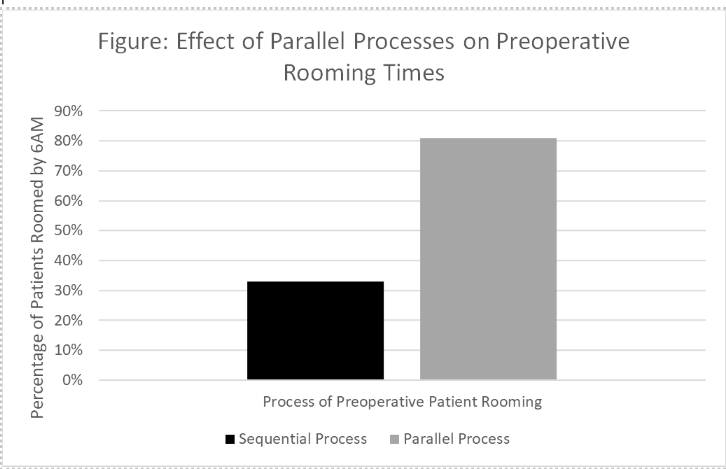
Introduction: On-time first case starts (FCS) is a nationally recognized indicator for operating room efficiency. While much attention is given to the minutes surrounding in-room time, opportunities for efficiency start from the moment the patient arrives in the hospital. Therefore, initial processes surrounding patient registration and rooming play an important role in achieving an on-time operating room (OR) start. We hypothesize LEAN methodology process improvement could enhance perioperative efficiency and standardization. Methods: The Parallel Process Quality Improvement Initiative was conducted from 7/2022-9/2022 in the main OR of a tertiary care academic center. 844 visits pre-implementation and 244 visits post-implementation were audited over the study period. The QI initiatives were developed in concert with a QI experienced urology faculty member. Both leadership and frontline stakeholders were engaged, including perioperative leadership, perioperative staff, and administrative staff to identify current workflows and potential interventions targeting outpatient elective procedures. Process mapping outlined current rooming workflows. Benchmarks were developed through stakeholder team collaboration, and outcomes based on these benchmarks were obtained. Results: Preliminary data revealed 844 patients who underwent elective FCS outpatient surgeries over a 2-month time period. Pre-implementation, patients were roomed by a mean time of 6:06AM. However, after collaboration with the multidisciplinary team, 6AM was chosen as the benchmark for FCS rooming. Overall, pre-implementation, 33% of FCS patients were roomed by 6AM. Process mapping revealed a sequential process, which was converted to a parallel process. Implementation of the parallel process rendered an improved 6AM rooming rate to 81% of FCS patients (Figure). Additionally, the parallel process reduced downtime for perioperative staff, by an average of 9 minutes (IQR=0, 13min). Conclusions: Using LEAN methodology of process improvement and collaboration, perioperative processes can be evaluated and improved. Benchmarking, process evaluation, and auditing are needed for sustainable improvement. Standardized, parallel processes support enhanced efficiency in the perioperative process. SOURCE OF Funding: None