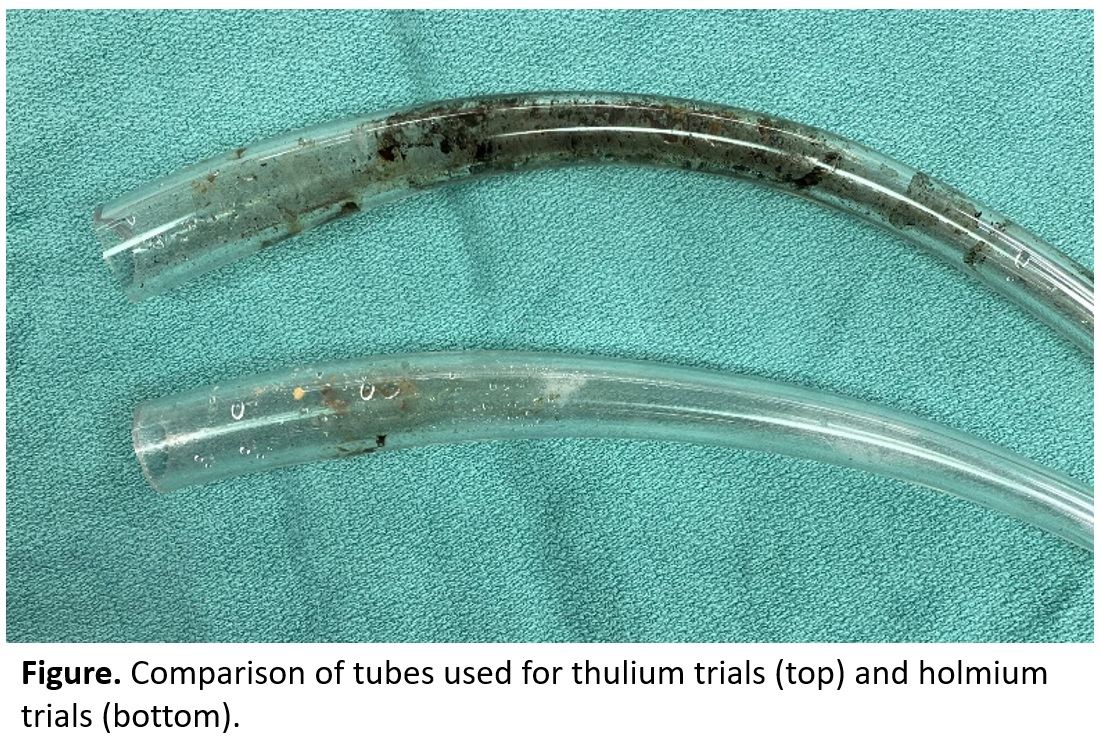
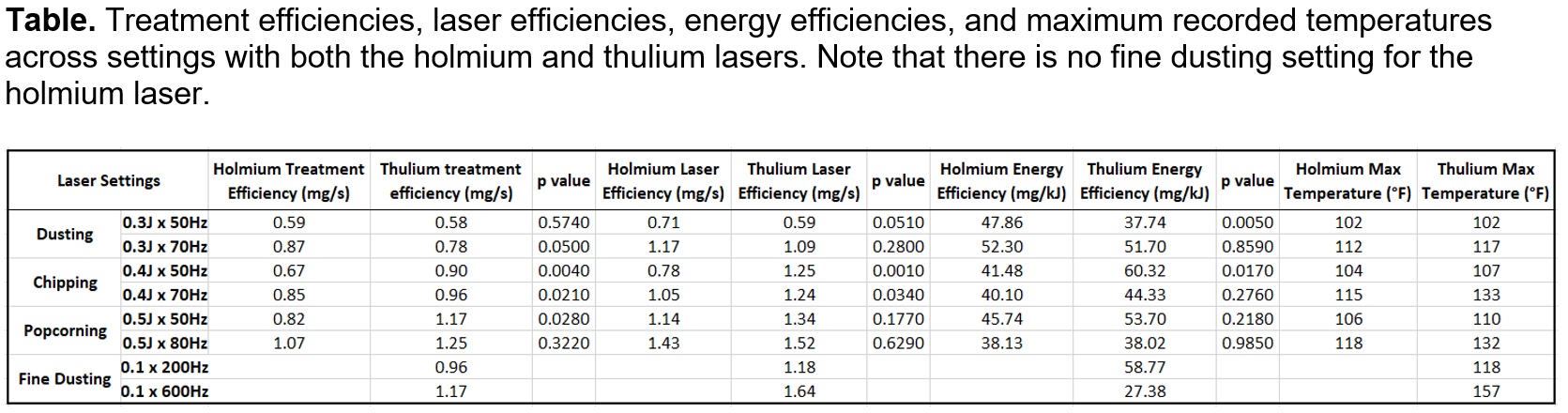
Introduction: Holmium:YAG and Thulium Fiber lasers are used for laser lithotripsy. In order to compare the efficiency of lithotripsy between the technologies, two commercially available laser system were tested in an in vitro model, the holmium:YAG Lumenis Pulse P120H (Boston Scientific, Marlborough, MA) and the thulium fiber Soltive SuperPulsed Laser (Olympus Surgical Westbrough, MA). Methods: Stones were created using 5:1 mixture of BegoStone. PVC tubes with a 13mm inner diameter were closed with a plug at one end and an access sheath at the other. 200um holmium and thulium laser fibers were used through a ureteroscope inserted through the sheath to treat the stones to <2 mm fragments. Aluminum mesh with 1mm squares was used to determine treatment completion. We performed 4 trials at a range of settings (Table). A probe in the plug measured the temperature during treatment. Treatment time was recorded with a timer. Total energy delivered and laser time was collected from the laser systems. We then calculated treatment efficiency (stone weight divided by treatment time), laser efficiency (stone weight divided by laser time), and energy efficiency (stone weight divided by joules delivered). P values were calculated using a two sample T test. Results: There were minimal efficiency differences between the thulium and holmium lasers across recommended settings (table). Both were more efficient at higher frequencies. Thulium generated higher aggregate temperatures than holmium. Discoloration and damage to the PVC tubing were seen with thulium laser but not the holmium (Figure). Conclusions: There appear to be minimal differences in efficiency between thulium and holmium lasers in this in vitro study. Further trials can be performed to corroborate these findings and their clinical relevance. Urologists should be aware of the thermal effects of each laser, particularly at higher frequencies. The clinical significance of the thermal data remain unclear. SOURCE OF Funding: None