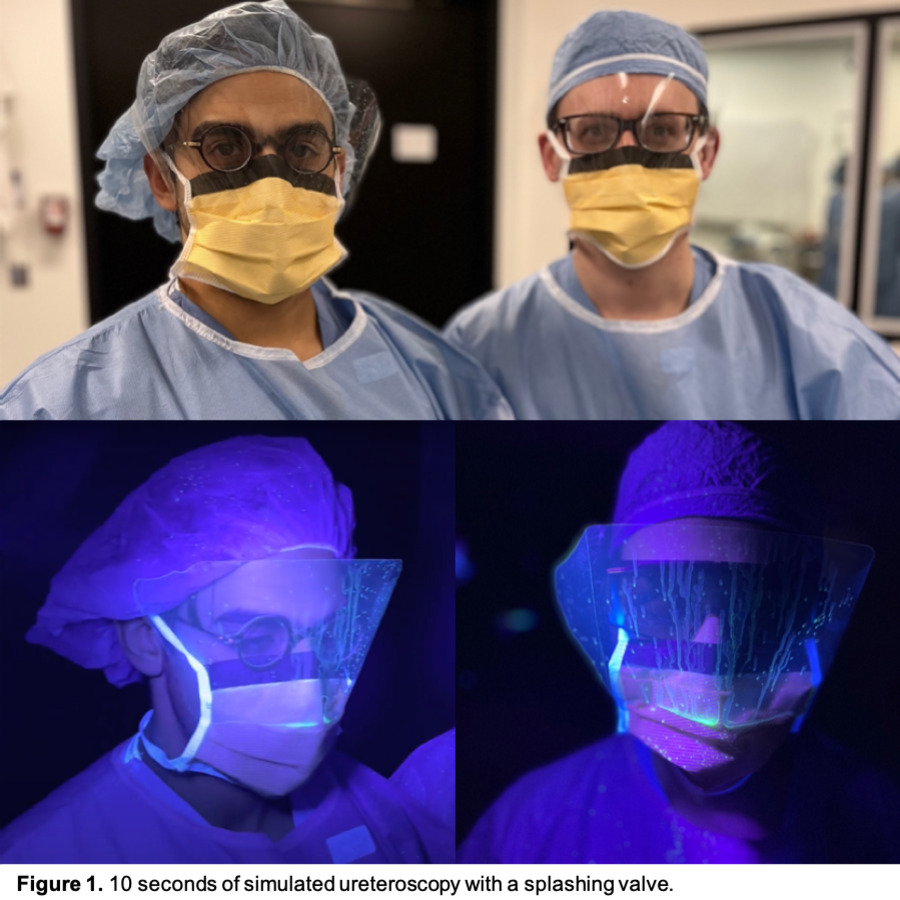
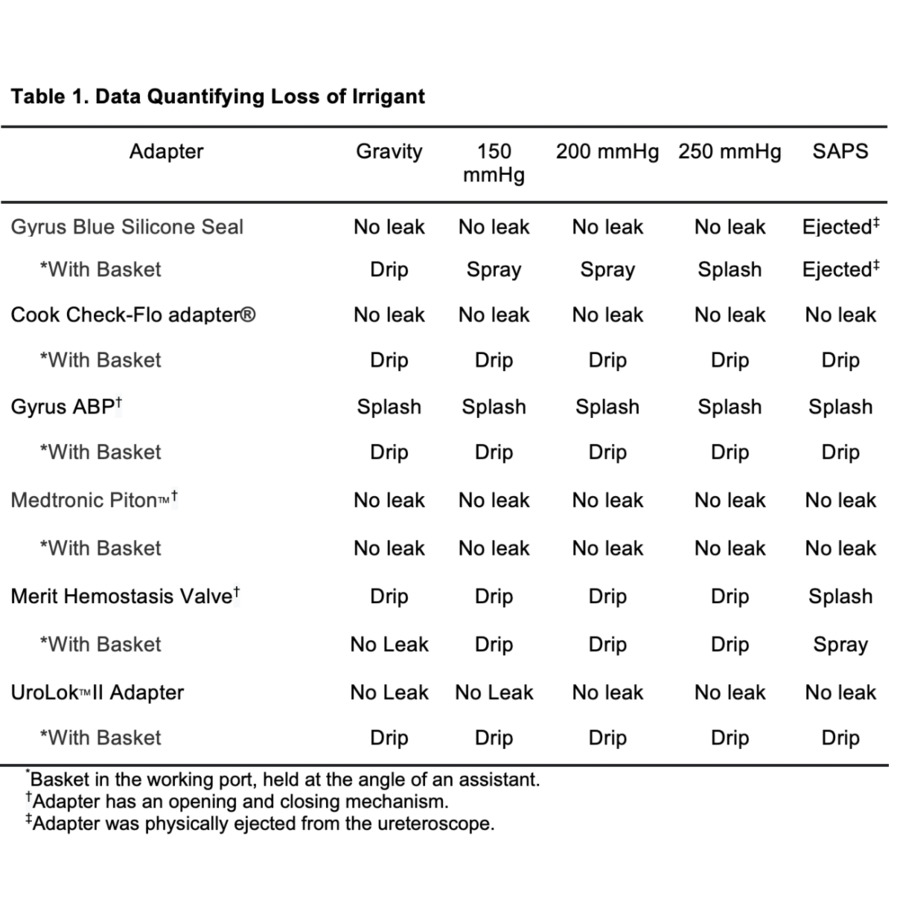
Introduction: There are a variety of ureteroscope adapters available to facilitate instrument passage while maintaining pressurized irrigation and preventing fluid loss. The potential for leakage from an adapter during a procedure is an occupational hazard for surgeons and OR assistants. We sought to evaluate the leakage potential of various ureteroscopic adapters. Methods: Six different ureteroscopic adapters were assessed while performing ureteroscopy through a tissue-realistic kidney and ureter model at various levels of pressurized saline (gravity, 150 mmHg, 250 mmHg, Single Action Pumping System (SAPS) (Boston Scientific)). Adapters were first tested out of their initial package and then again after being punctured with an introducer and once more after insertion of a 1.5 Fr Stone Basket. Adjustable valves were opened and set to the most minimal degree to accommodate the basket. Leaking was classified as a drip (non-projectile leakage), a spray (small volume projectile leak), or a splash (large volume projectile leak). Hazardous spray was defined as any projectile leakage. UV fluorescent stain was instilled in the irrigation and utilized to measure the maximal spray distance from the surgeon. Results: Leakage results are presented in Table 1. Only one valve demonstrated no leak under any simulated circumstance (Medtronic Piton). The Gyrus ABP adapter had the highest potential for splash even doing so at gravity. Maximal spray distance was 14.4 feet. Figure 1 demonstrates the effect on operators. Conclusions: Ureteroscope adapter leakage can be variable among adapters, surgeons should be aware of the hazardous potential for exposure. SOURCE OF Funding: None.