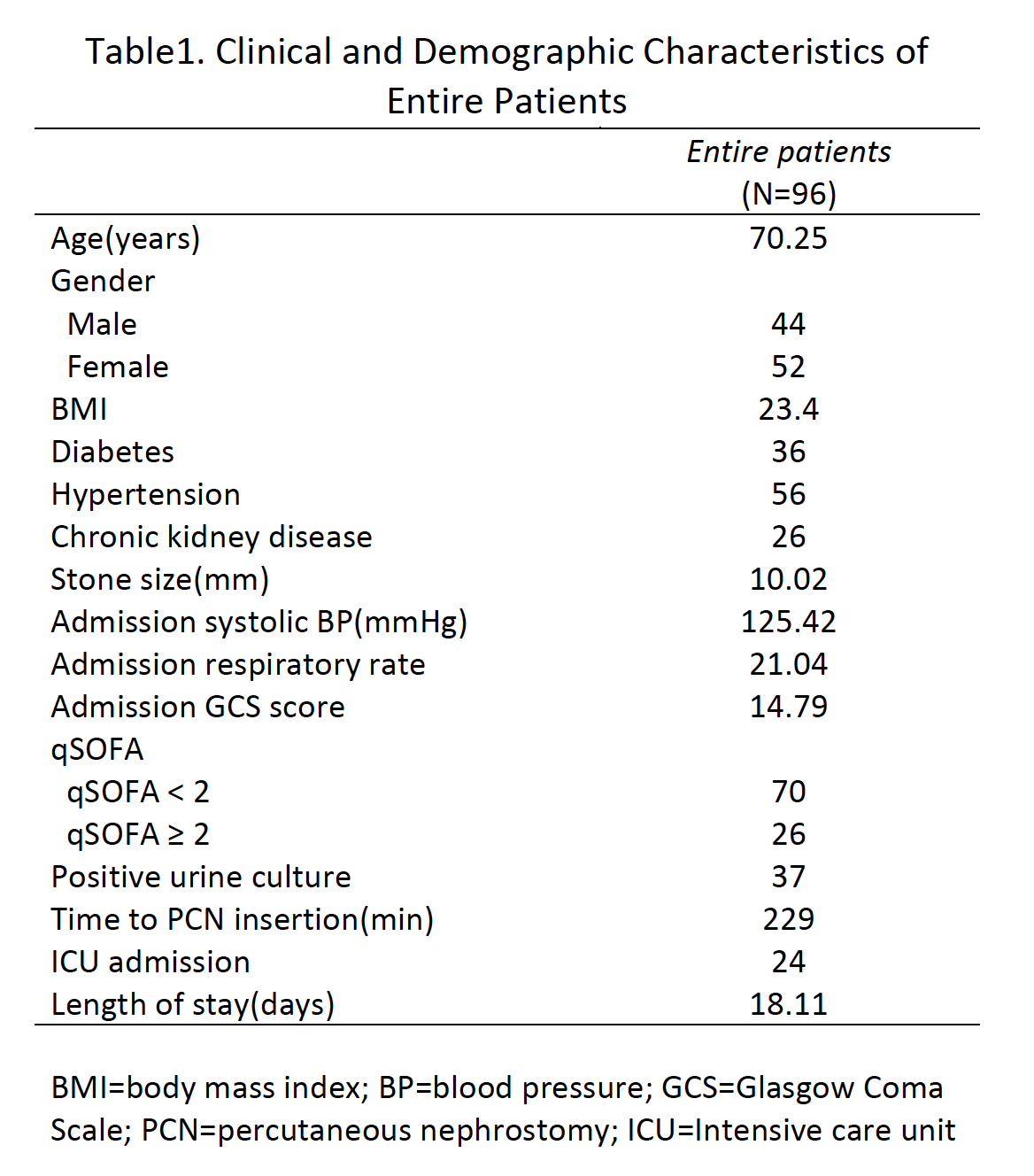
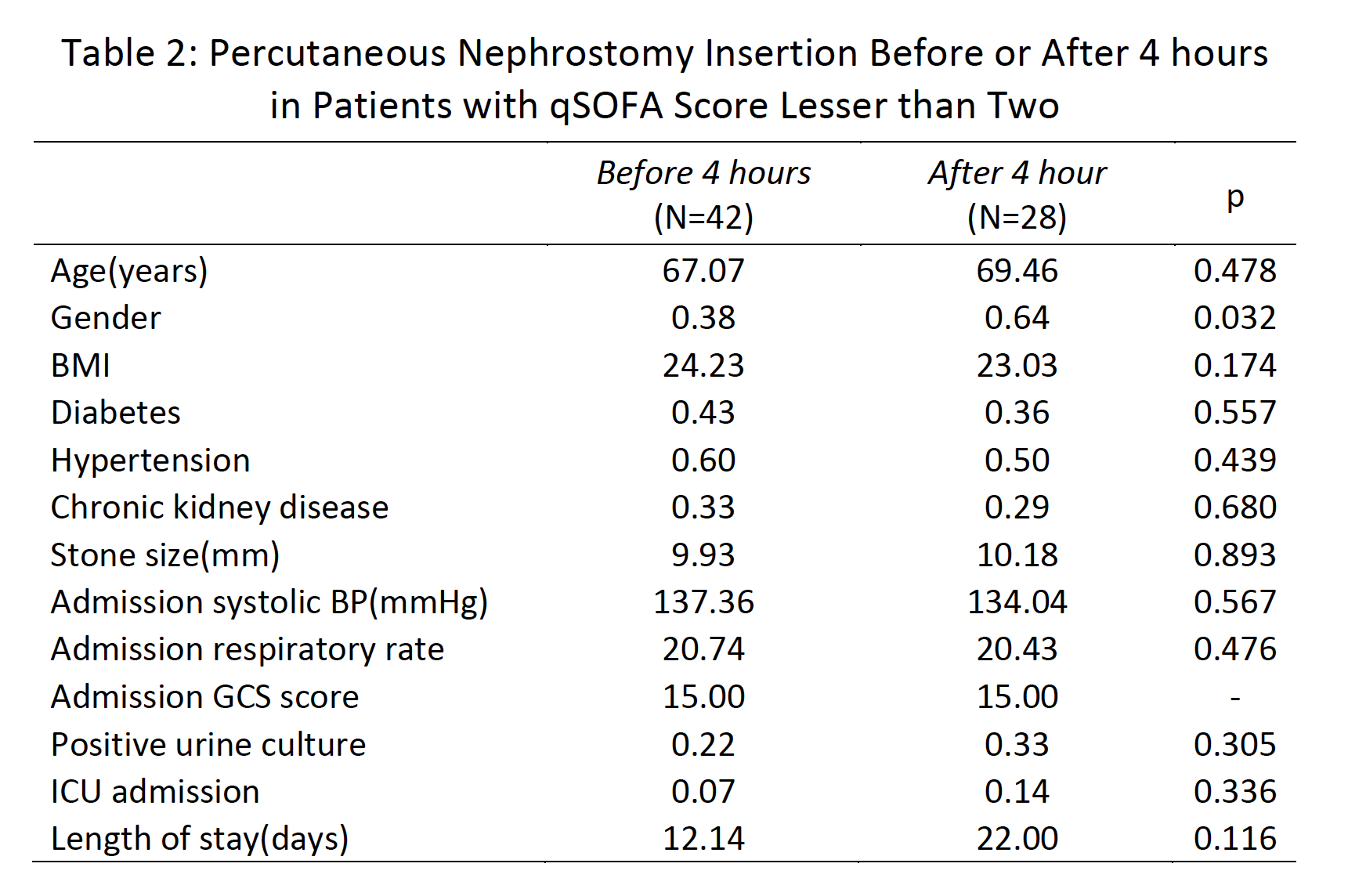
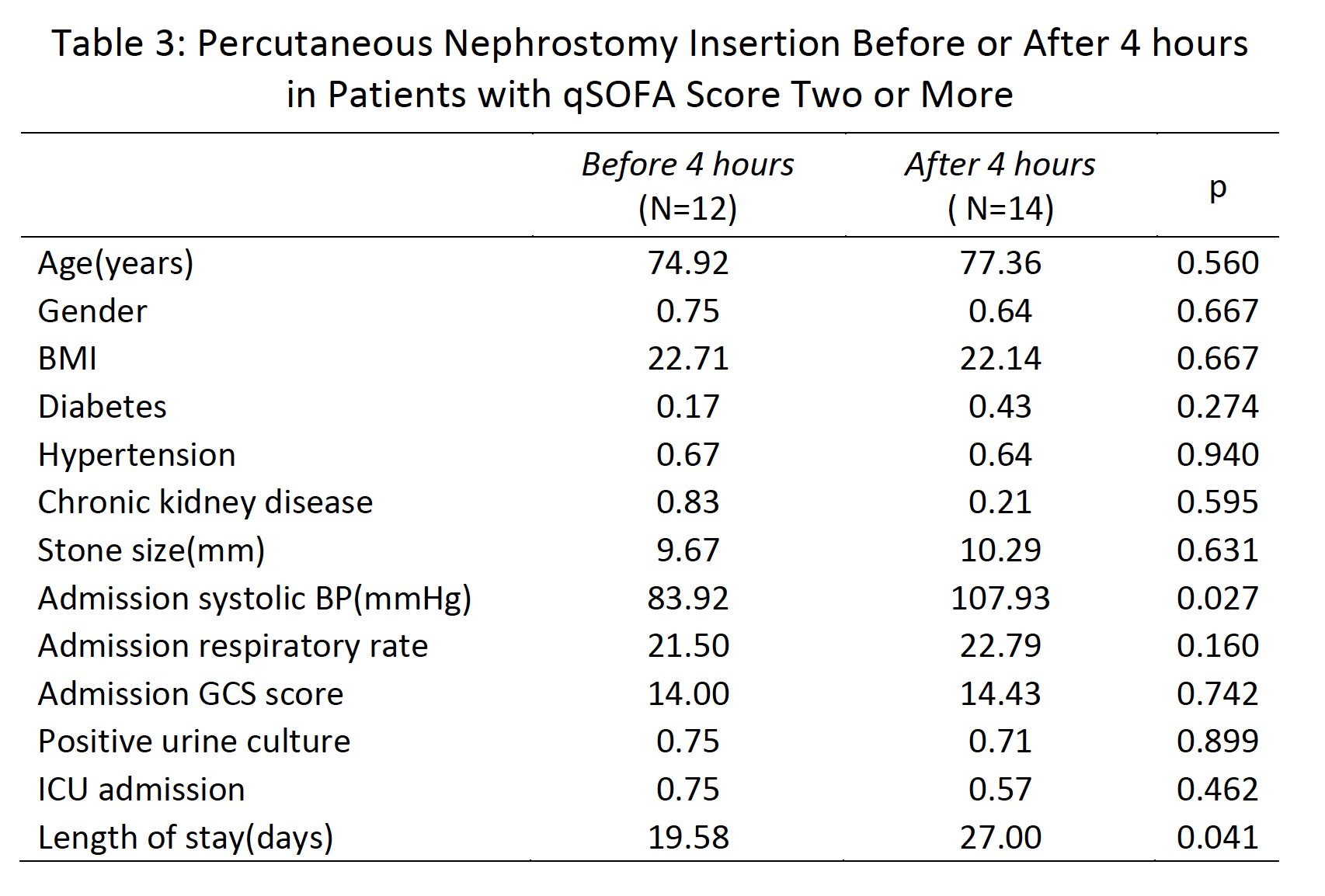
Introduction: To investigate how time to percutaneous nephrostomy insertion impacts on prognosis of patients with obstructing ureteral stones with sepsis. Methods: Using a database from 2017 to 2021, we evaluated patients who visited emergency department with obstructive uropathy due to urinary stones and underwent percutaneous nephrostomy insertion. We classified patients in two groups, whom met quick sequential organ failure assessment(qSOFA) score of lesser than two, and qSOFA score of two or more, and retrospectively investigated patients. The aim of this study is to understand how time to percutaneous nephrostomy insertion affects the prognosis, including total length of stay, need for intensive care unit. Results: Total 96 patients met the criteria. 70 patients had qSOFA score of lesser than two, and 26 patients had qSOFA score of two or more. Overall, 37 patients have positive urine culture. Mean time to percutaneous nephrostomy insertion was 229 minutes, and mean length of stay was 18.11 days. There was no difference between groups in clinical values. In group of qSOFA score of lesser than two, there was no correlation between the time to procedure and length of stay, but in group of qSOFA score of two or more, hospitalization days was significantly shorter in patients of percutaneous nephrostomy before 4 hours than patients whom underwent procedure after 4 hours. Conclusions: In patients with obstructive uropathy with high risk of sepsis, length of stay would be decreased as time to percutaneous nephrostomy insertion shortened. SOURCE OF Funding: None