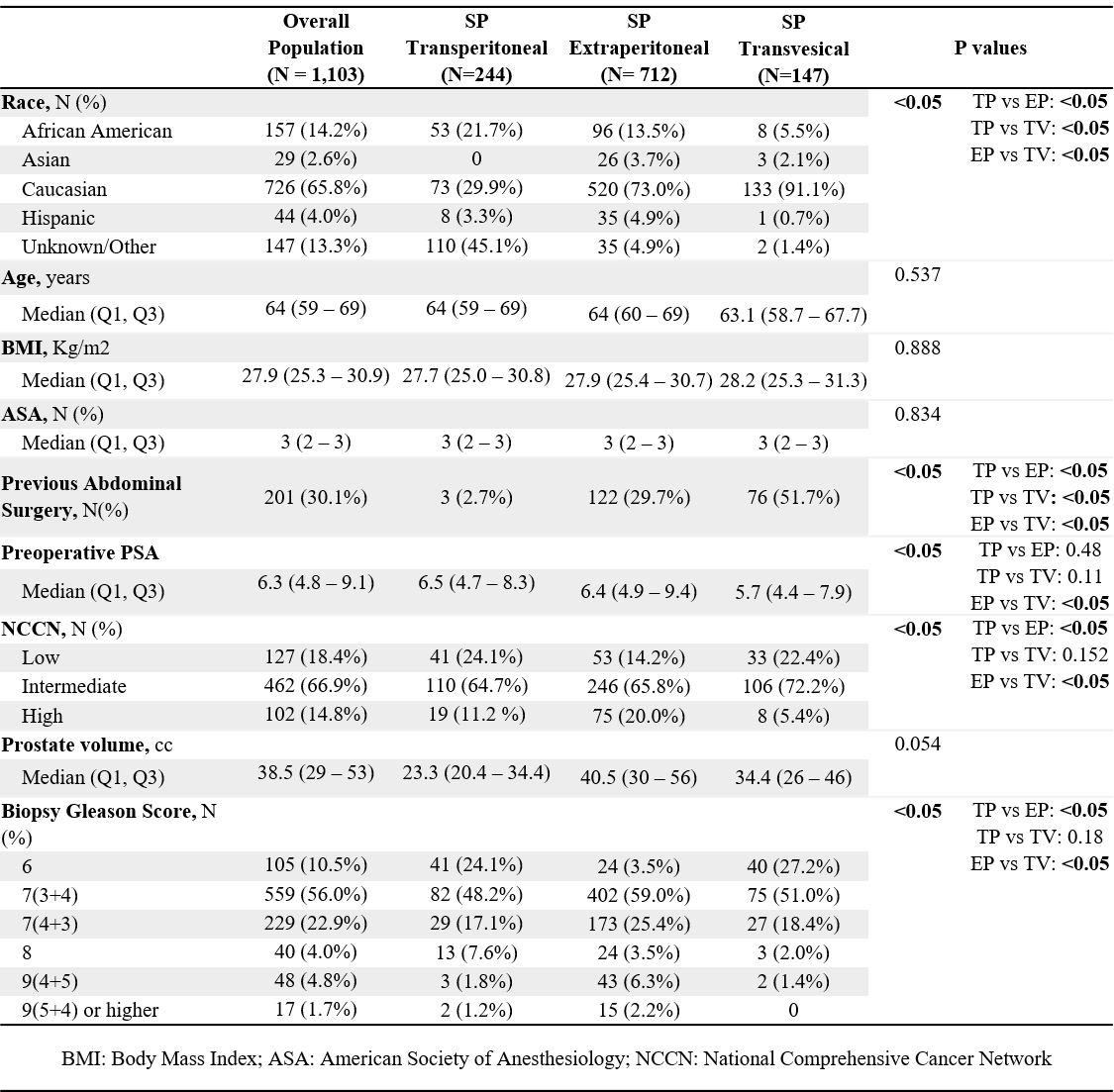
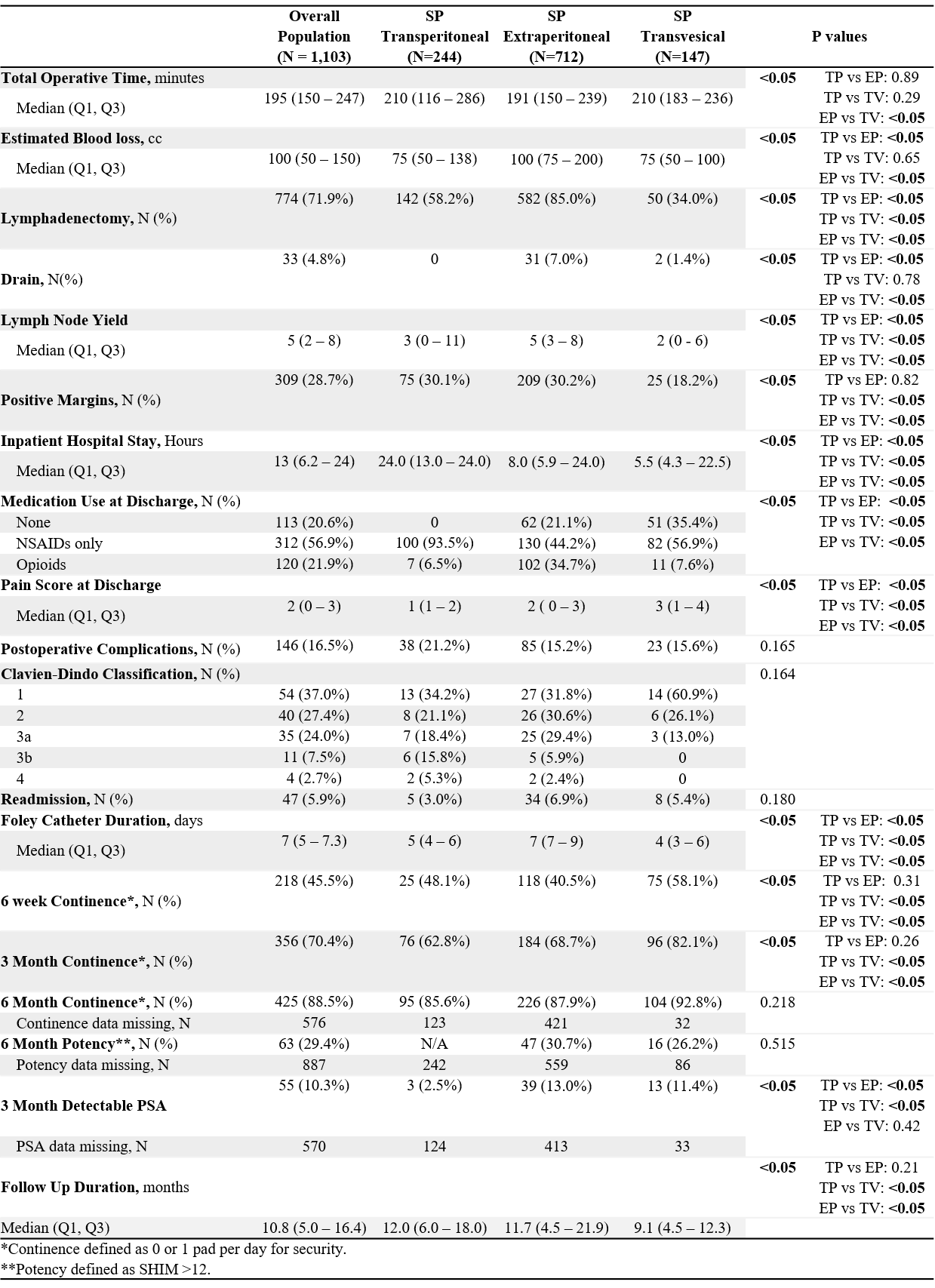
Introduction: Radical prostatectomy using the single-port (SP) robotic platform has been performed using a variety of surgical approaches. We sought to report the outcomes of a large multi-institutional series and compare techniques. Methods: From 2/2019 to 10/2022, SP robotic radical prostatectomy was performed in 1,103 patients by experienced robotic surgeons at nine institutions from the SPARC collaboration. Perioperative data and early postoperative outcomes were collected prospectively and analyzed retrospectively. Results: SP radical prostatectomy was performed using transperitoneal (TP, n = 244), extraperitoneal (EP, n= 712), and transvesical (TV, n= 147) approaches. All procedures were completed successfully without intraoperative complications or open conversion. About 30% of all patients had a history of prior abdominal surgery, with significant differences noted based on operative technique; 50% TV, 30% EP, and 3% TP. The EP approach was associated with higher NCCN risk and biopsy Gleason scores, as well as a higher lymph node yield than in other approaches. Opioid were prescribed in 20% and pain scores at discharge were low for all patients. Significant differences were identified in postoperative parameters including the performance of lymphadenectomy, inpatient hospital stay, and foley catheter duration. The TV approach was associated with a lower rate of positive margins (18.2%) compared with EP (30.2%) and TP (30.1%). Follow up duration for the entire series was 10.8 months. Conclusions: We reported the outcomes of a large series of single-port radical prostatectomy with promising short hospital stay and pain scores. Compared with other techniques, the transvesical approach is associated with shorter length of stay, faster time to continence, and a lower rate of positive surgical margins. SOURCE OF Funding: none