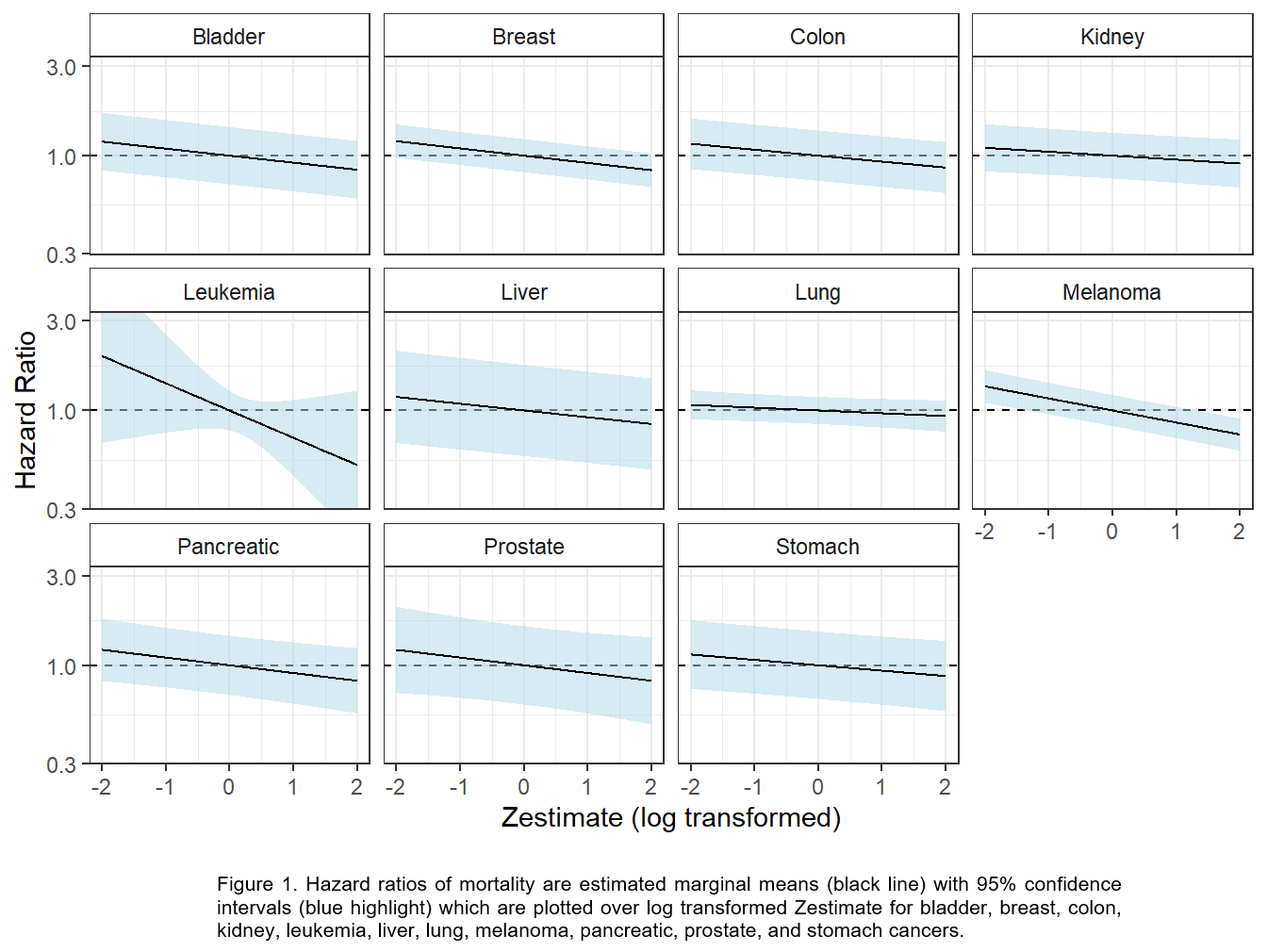
Introduction: Socioeconomic inequalities have been demonstrated to be associated with worse clinical outcomes in patients with cancer. We sought to determine the relationship between an individual’s home value, as a surrogate marker for income level, and mortality in patients with urologic cancer. Methods: The Ohio Cancer Incidence Surveillance System (OCISS) registry was queried for patients who were diagnosed with various cancers, including bladder, kidney, and prostate cancer, between 1996 and 2016. Patient addresses were used to determine the Zestimate®, which is an estimate of the home market value. Primary outcome was survival time, determined as days from diagnosis. Cox proportional hazard models, accounting for age, stage, and year of diagnosis, were performed to determine the relationship between mortality and Zestimate. Results: Of 825,272 patients identified in the OCISS, 80,682 patients with prostate cancer, 28,174 patients with bladder cancer, and 20,117 patients with kidney cancer were included for analysis. Patients diagnosed with localized disease consisted of 78.2%, 38.1%, and 60.8% of the overall cohorts of prostate, bladder, and kidney cancer, respectively. The total mortality rate was 39.9%, 59.3%, and 47.2%, and the median survival time was 436 (interquartile range [IQR] 164-2059), 496 (IQR 163-1747), and 272 (IQR 107-1055) days from diagnosis for prostate, bladder, and kidney cancer, respectively. The relationship between hazard ratio (HR) for overall mortality and Zestimate is demonstrated in Figure 1. Increasing Zestimate was significantly associated with decreased risk of mortality in patients with prostate cancer (HR 0.92, 95% confidence interval [CI] 0.89-0.96, p<0.001) and bladder cancer (HR 0.88, CI 0.81-0.94, p<0.001). Increasing Zestimate was significantly associated with decreased risk of mortality in patients with localized kidney cancer (HR 0.90, CI 0.81-0.99, p=0.012). Conclusions: Higher home values, as determined by Zestimate, are associated with improved mortality outcomes in patients diagnosed with cancer. SOURCE OF Funding: There was no direct funding from an outside organization or sponsor.

.jpg "Alec Zhu, MD (he/him/his) photo")