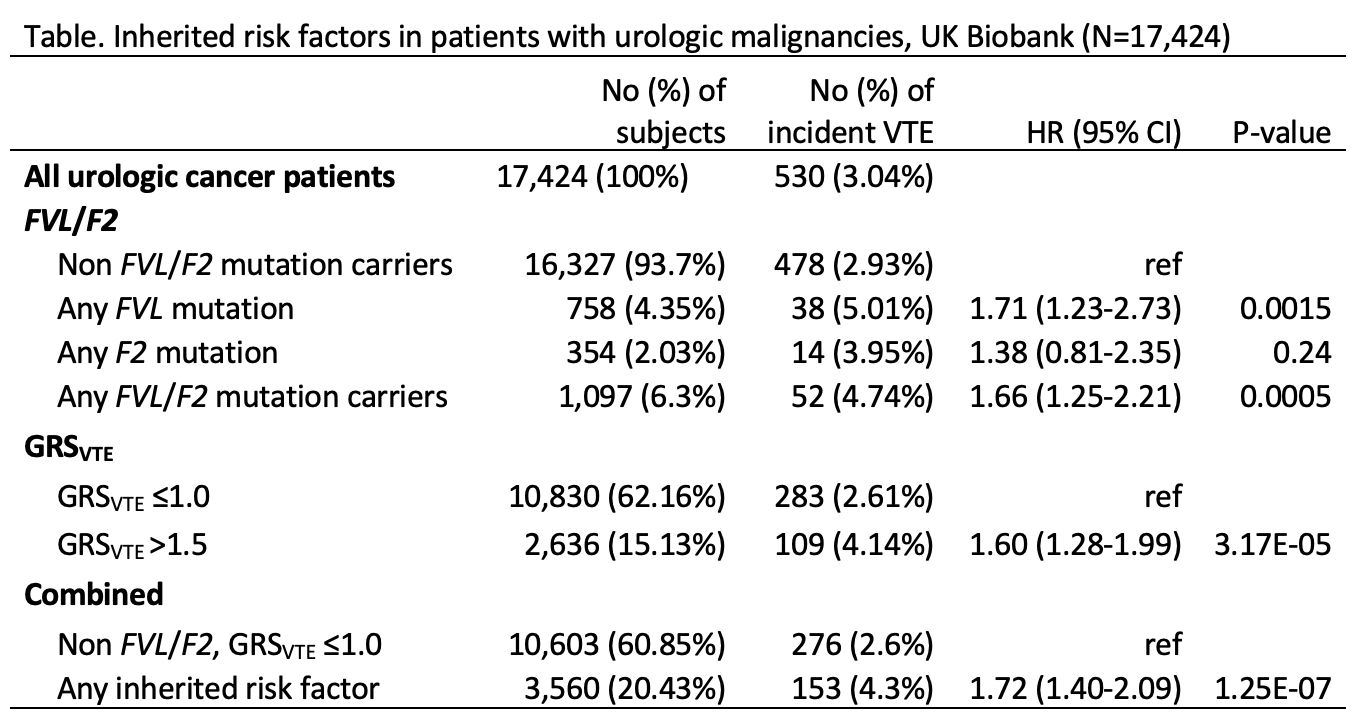
Introduction: Venous thromboembolism (VTE) is a significant cause of morbidity and mortality in patients with urologic malignancies. Risk factors for urologic patient with cancer include undergoing surgery (particularly pelvic surgery) and inherited genetic mutations. Recent GWAS have revealed multiple single nucleotide polymorphisms associated with VTE risk. A genetic risk score for VTE (GRSVTE) has previously been validated, and may provide superior risk stratification for VTE compared with established risk calculators. The GRSVTE represents the relative risk of VTE for patients compared with the general population. The objective of this study was to evaluate the association between incidence of VTE in patients with urologic malignancies and inherited genetic risk factors. Methods: We analyzed patients with urologic malignancies from the United Kingdom Biobank (UKB), a population-based study of 500,000 volunteers age 40-69 years recruited in 2006 from the United Kingdom. Patients were included if they had a diagnosis of cancer in one of the following organs: penis, prostate, testis, kidney, renal pelvis and ureter, bladder, or unspecified urinary or male genital organs. We defined GRSVTE high risk as a value > 1.5. Incident VTE rates were evaluated based on primary cancer site, mutation status, and GRSVTE. Multivariable analysis adjusting for age at recruitment, gender and genetic background was performed to determine hazard ratios of VTE. Results: The study cohort included 17,424 patients with urologic malignancy. Of these patients, 530 developed incident VTE. Compared to 6.3% of patients with carriers of FVL/F2, 15.13% had a higher GRSVTE (>1.5) (Table). The increased risk for VTE was similar between patients with GRSVTE >1.5 and FVL/F2. When evaluating each specific urologic malignancy, these same trends held true. Conclusions: The GRSVTE is significantly associated with incidence of VTE in patients diagnosed with urologic malignancy. The GRSVTE can explain a significantly greater proportion of patients who develop VTE compared to other genetic causes. Patients with elevated genetic risk for VTE may benefit from more aggressive monitoring or anticoagulation in the perioperative setting. SOURCE OF Funding: NA