Ignite Talk
Benjamin Hur, PhD
Mayo Clinic
Rochester, MN, United States
Disclosure: Disclosure information not submitted.
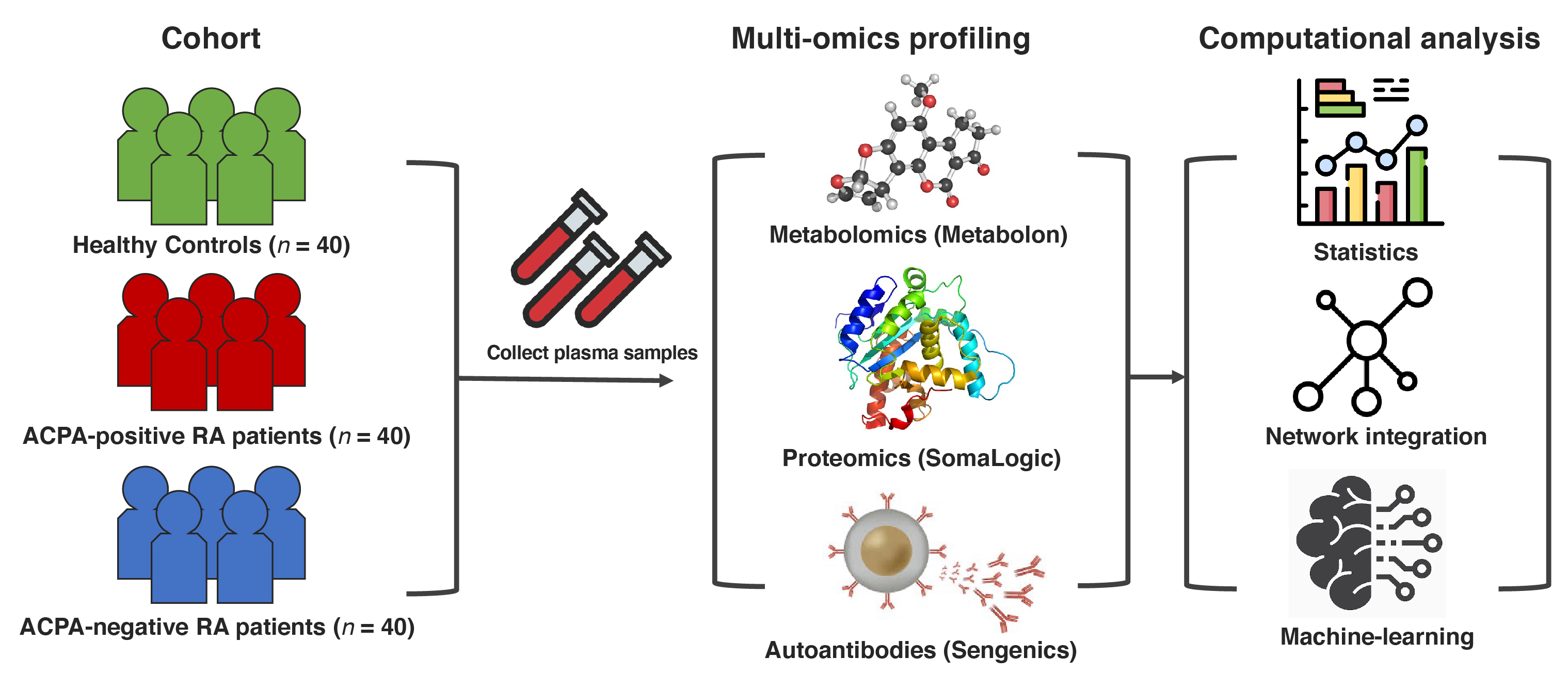 Figure 1. Study design overview and data analysis strategy. Plasma samples were collected from ACPA-negative RA patients (n = 40), sex-/age-matched ACPA-positive RA patients (n = 40), and healthy controls (n = 40). Global proteomic, metabolomic, and autoantibody phenotyping were performed on the plasma samples. On the ensuing multi-omics data, computational analyses were performed to identify biomolecular features specific to ACPA-negative RA and potential computational biomarkers for ACPA-negative RA diagnostics.
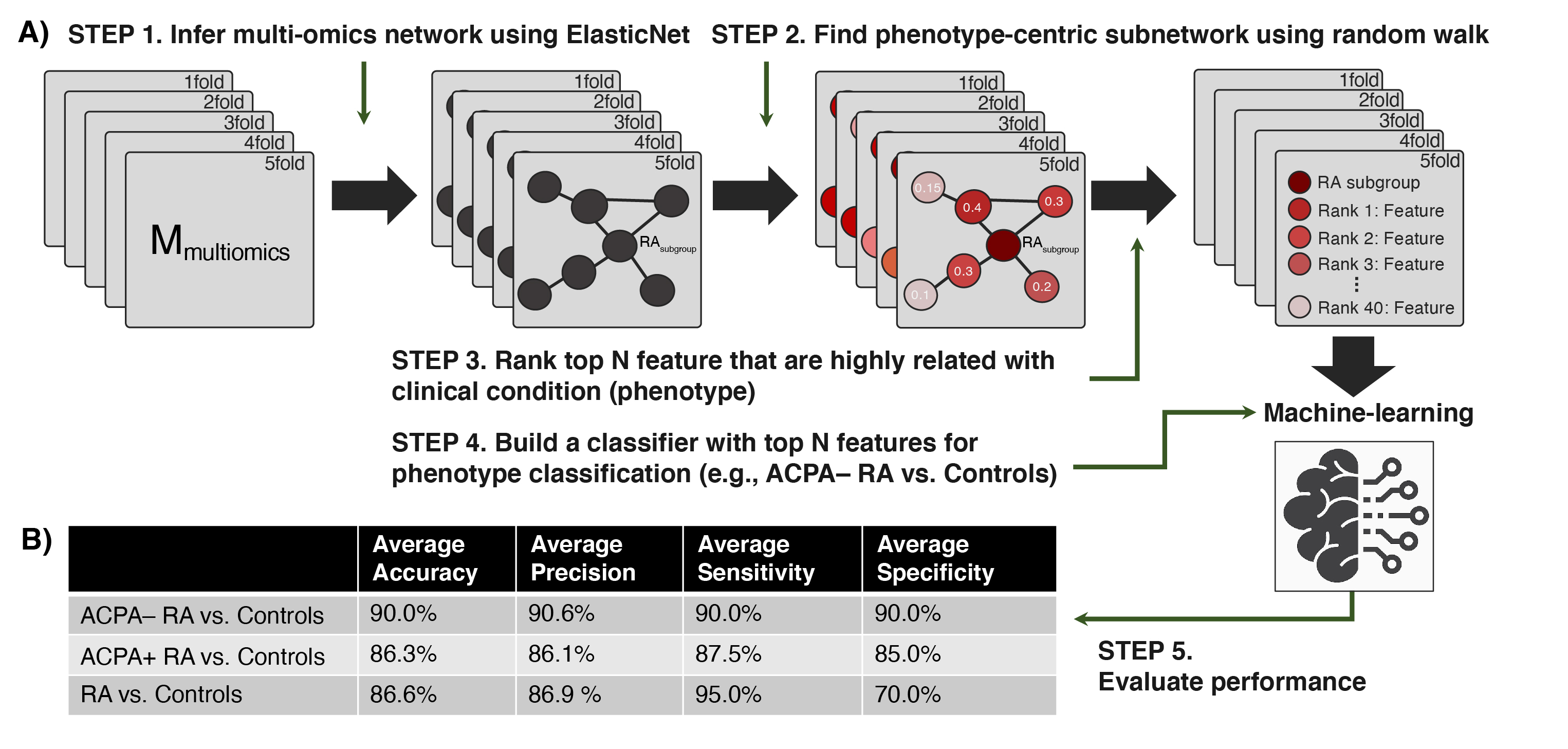 Figure 2. Performance of our network-driven, integrative multi-omics biomarker discovery approach was evaluated in 5-fold cross-validation. (A) A machine-learning framework that (i) infers a multiplex network from multi-omics data, (ii) identifies a subset of the multiplex network (a subnetwork) that includes only the features most associated with an RA subgroup, and (iii) uses the top N features to design classifiers for RA. (B) Average accuracy, precision, sensitivity, and specificity in each classification scenario. Of note, our machine-learning strategy obtained 90.0% (or slightly higher) results in all four metrics when distinguishing ACPA-negative RA from controls.