Poster Session C
Epidemiology, health policy and outcomes
Jenny Gong, BS
Case Western School of Medicine
Cleveland, OH, United States
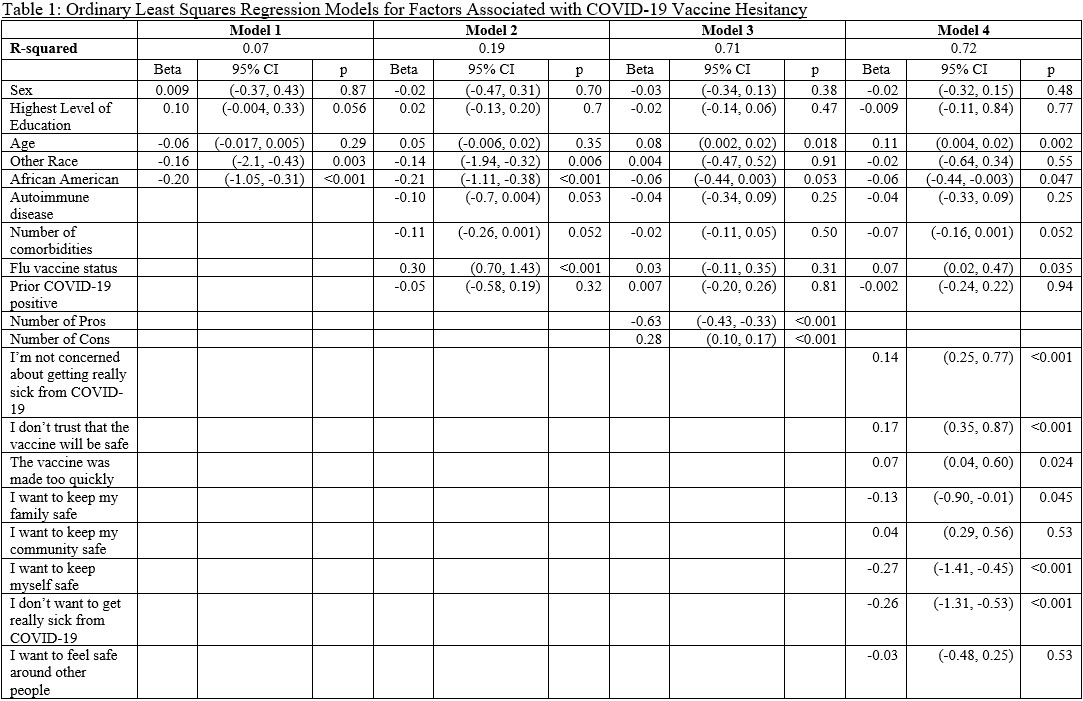 Table 1 shows four ordinary least squares regression models created to assess factors associated with COVID-19 vaccination hesitancy. Model 1 compares the association of demographics, Model 2 adds autoimmune disease and flu vaccine status, Model 3 includes the number of pros and cons, and Model 4 adds various reasons both for and against vaccination.
 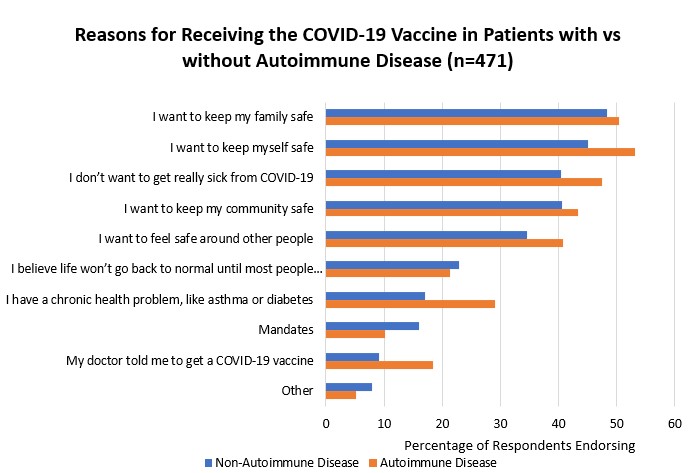 Figure 1 shows the proportion of respondents endorsing various reasons for receiving COVID-19 vaccination, divided by autoimmune disease status. Those with autoimmune disease were more likely to cite having a chronic health problem (29.1% vs 17.1%, p=0.003) and physician recommendations (18.4% vs 9.1%, p=0.005) as reasons to receive vaccination.
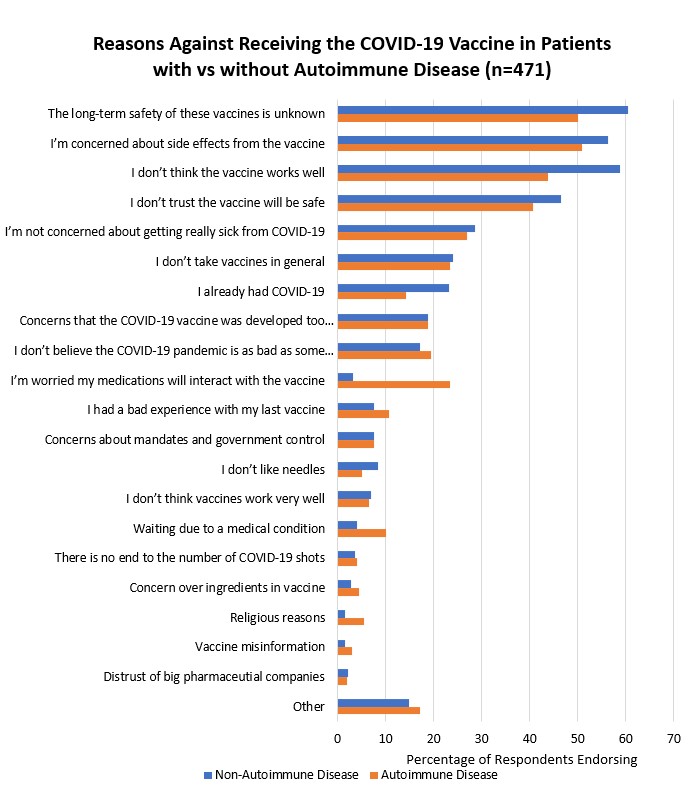 Figure 2 represents the proportion of respondents citing various reasons against receiving COVID-19 vaccination, divided by autoimmune disease status. Those with autoimmune disease were more likely to be concerned about potential medication interaction with the vaccine (22.4% vs 3.3%, p < 0.001) than healthy controls.