Abstract Session
Fibrosing rheumatic diseases (scleroderma, MCTD, IgG4-related disease, scleroderma mimics)
Urvashi Kaundal, PhD
National Institutes of Arthritis and Musculoskeletal and Skin Diseases (NIAMS), National Institutes of Health (NIH)
Chevy Chase, MD, United States
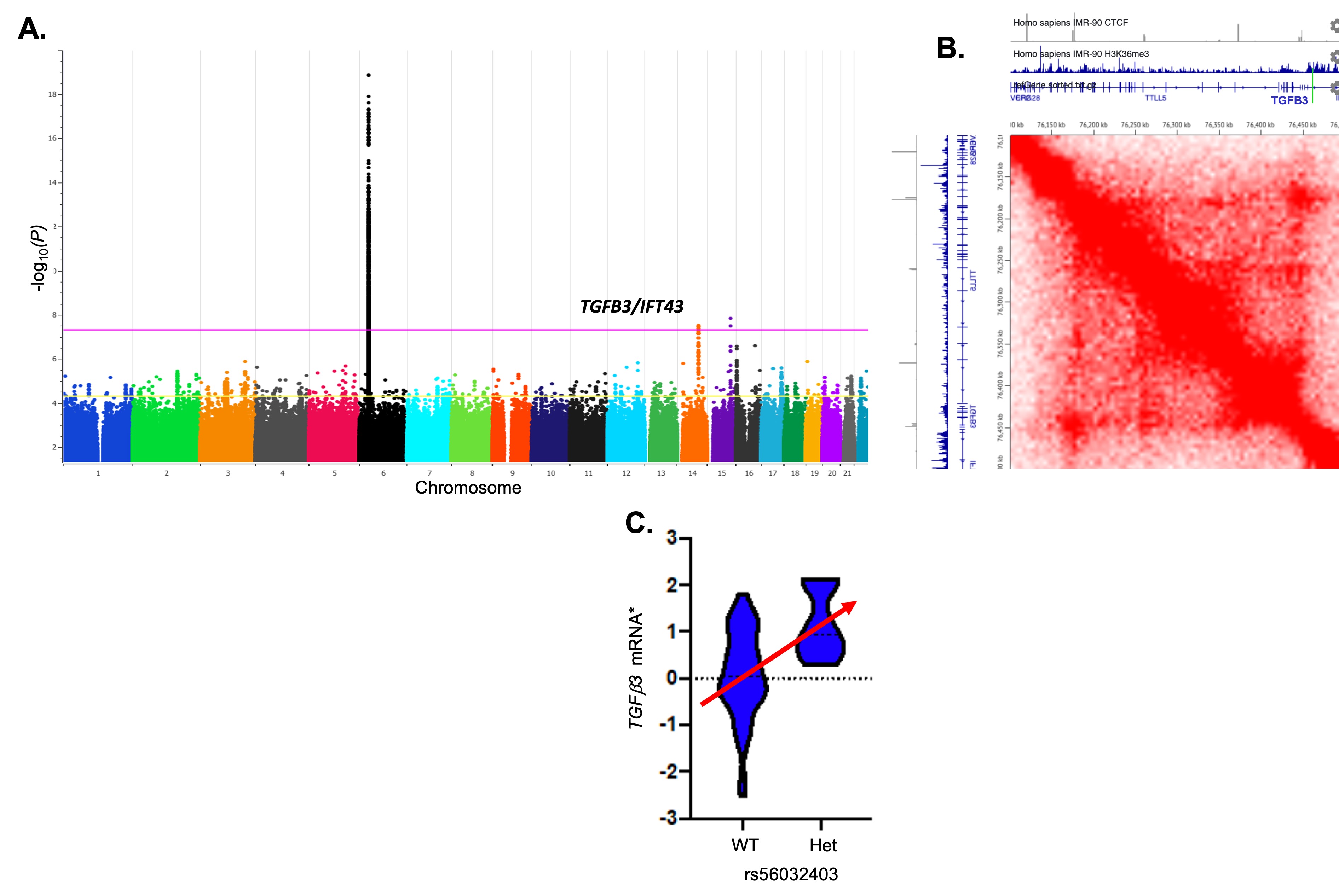 Fig 1. A. Manhattan plot for association with SSc versus controls; B. Topologically associated domain (TAD) comprising the variant, rs56032403 (green line) and the TGFB3 promoter; C. rs56032403 eQTL analysis for LCLs. * normalized expression; WT- wild type; Het- heterozygous.
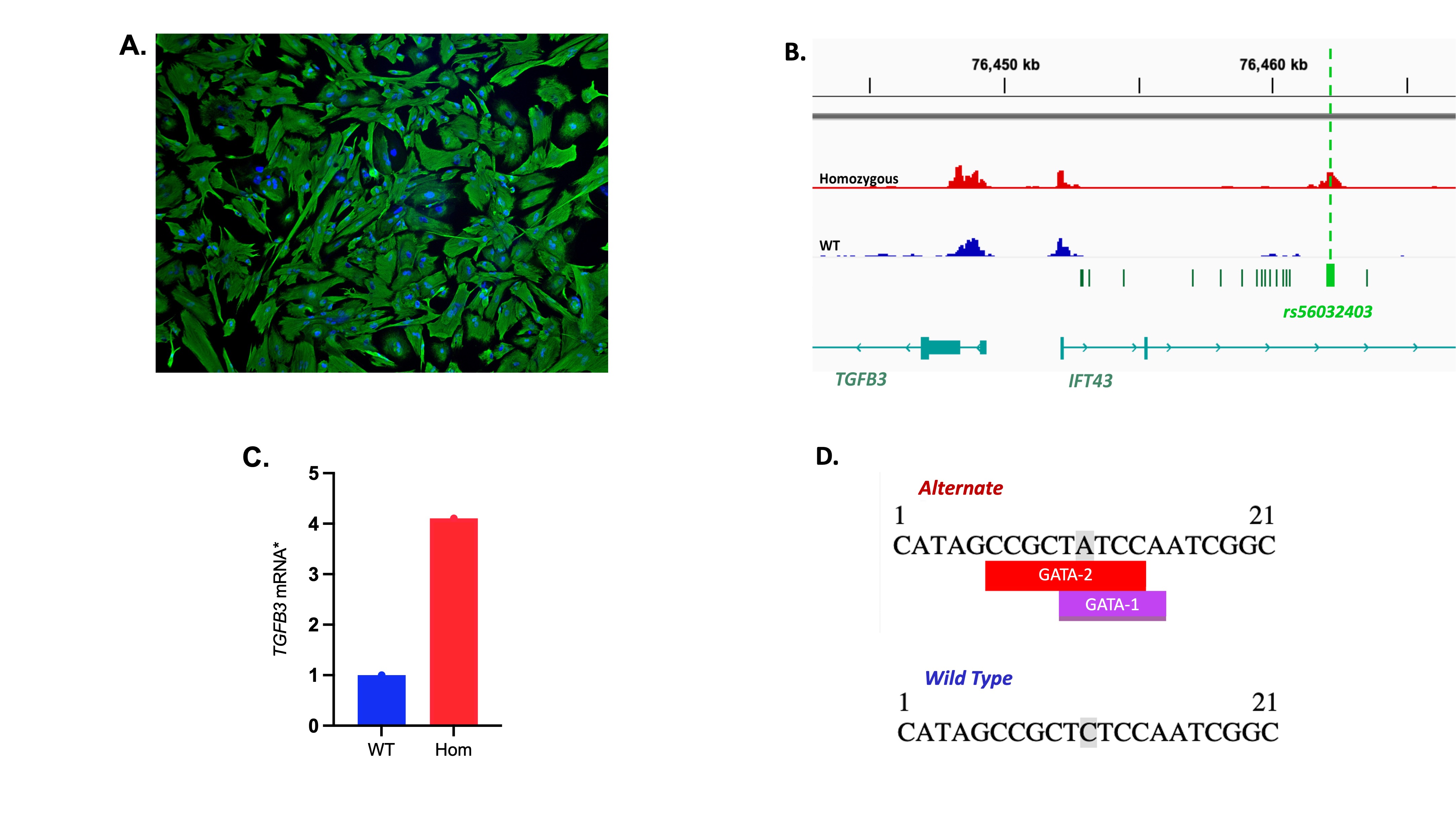 Fig 2. A. Fluorescent microscopy image of iPSC-LCL-derived fibroblasts stained for Vimentin, a-SMA, Actin, Hsp47, S100A4 (green) and nuclei (blue); B. ATAC-seq tracks for LCL-derived fibroblasts homozygous and WT for rs56032403 variants (top variant in green); C. RNA-seq for TGFB3 expression D. Transcription factor binding prediction at site of rs56032403 variant. *normalized expression; hom- homozygous LCL-iPSC-derived fibroblasts; WT- wild type LCL-iPSC-derived fibroblasts.
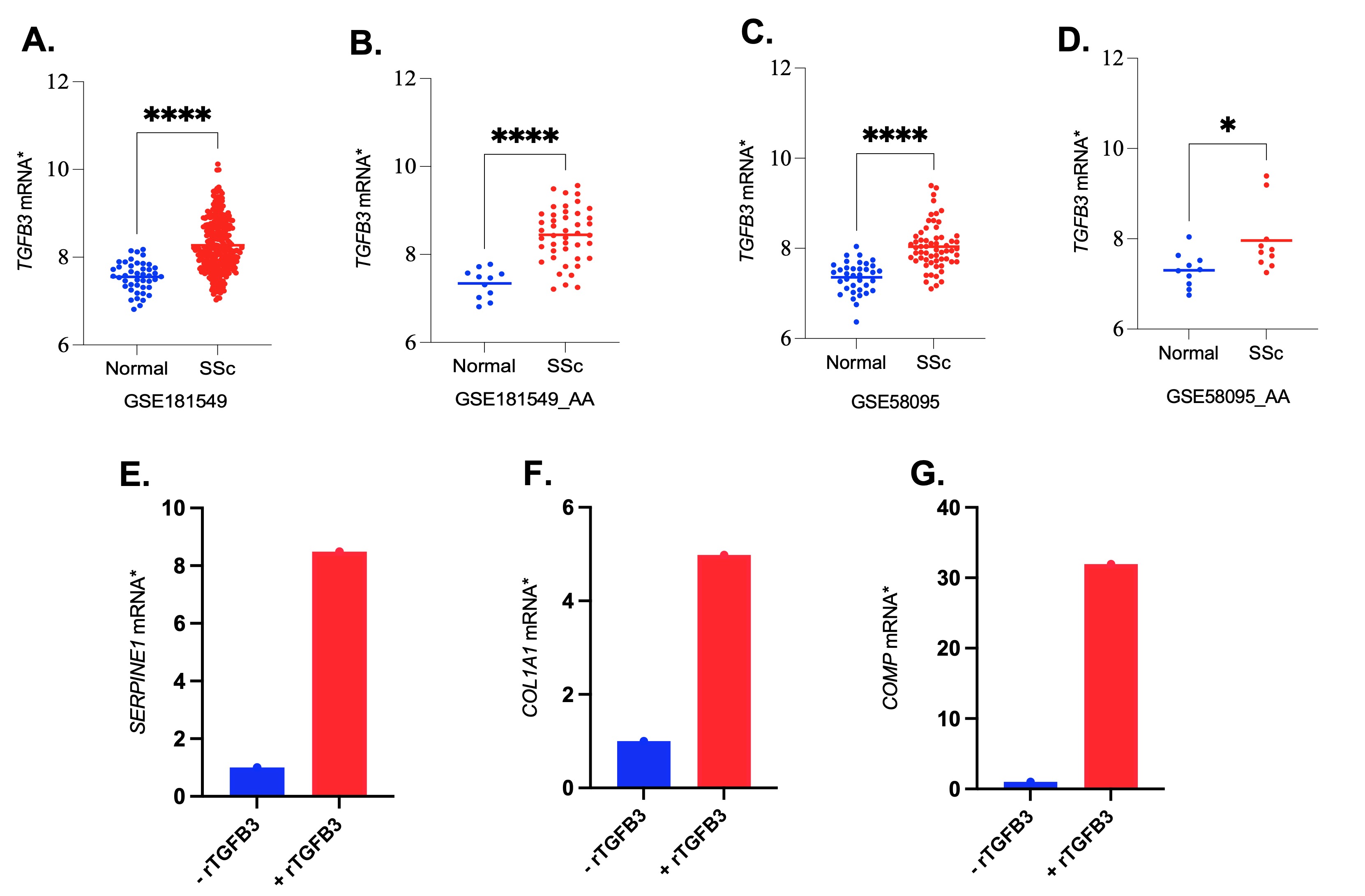 Fig 3. Differential expression of TGFB3 in skin samples of A, C. SSc patients and healthy controls, B, D. African American SSc patients and healthy controls. Differential expression of E. SERPINE1, F. COL1A1, G. COMP in untreated (-rTGFB3) or rTGFB3 treated (+ rTGFB3) human dermal fibroblasts. *normalized expression.