
.png)
Syndromes/Craniofacial Anomalies


Kelsey L. Martinez, DDS
CCHMC Pediatric Dental Resident
Cincinnati Children’s Medical Center Hospital, Cincinnati, OH
Cincinnati Children's Hospital Medical Center
Bellevue, Kentucky, United States
Sarat Thikkurissy, DDS, DDS, MS
Division Director/Research Mentor
Cincinnati Childrens Hospital Medical Center (Cincinnati, OH)
Cincinnati, Ohio, United States
Blake Dickens, DMD
Private Practice
Kim Jacobs, DDS
Private Practice
Anne Lucky, Medical Doctor
Cincinnati Children's Medical Center
Annmarie Matusak, DDS, DDS
Program Director
Cincinnati Childrens Hospital Medical Center (Cincinnati, OH)
Cincinnati Children's Hospital Medical Center
Cincinnati, Ohio, United States
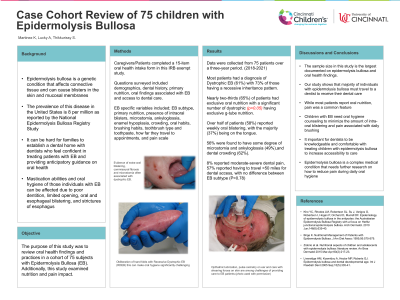
Purpose: The purpose of this study was to review oral health findings and practices in a cohort of 75 subjects with Epidermolysis Bullosa (EB). Additionally, this study examined nutrition and pain impact.
Methods: Caregivers/Patients completed a 15-item oral health intake form in this IRB exempt study. Questions surveyed included demographics, dental history, primary nutrition, oral findings associated with EB and access to dental care.
Results: Data were collected from 75 patients over a three-year period. Most patients had a diagnosis of Dystrophic EB (61%) with 73% of those having a recessive inheritance pattern. Nearly two-thirds (65%) of patients had exclusive oral nutrition with a significant number of dystrophic (P=0.05) having exclusive g-tube nutrition. Over half of patients (58%) reported weekly oral blistering, with the majority (37%) being on the tonge. Additionally, 56% were found to have some degree of microstomia and ankyloglossia (49%), and dental crowding (62%). While 8% reported moderate-severe dental pain, 57% reported having to travel >50 miles for dental access, with no difference between EB subtype (P=0.78)
Conclusion:
Conclusion: Patients with Epidermolysis Bullosa presented specific oral challenges associated with EB subtype and oral anatomic findings. Findings for crowding, microstomia, g-tube nutrition in Recessive Dystrophic EB patients should be considered for posterior tooth extraction to potentially improve oral hygiene.