
.png)
Restorative


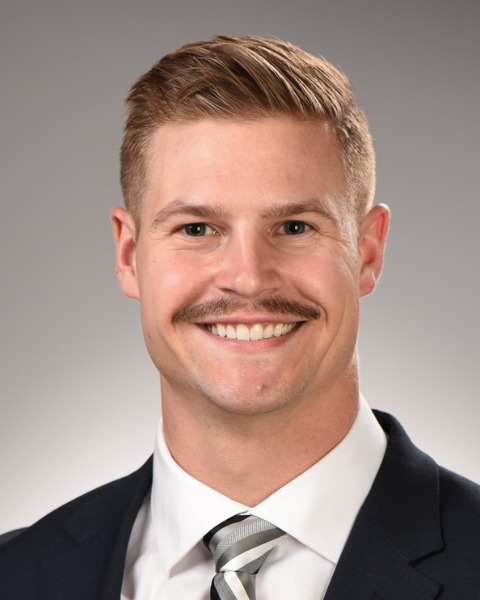
Adam T. Woroniecki, DDS
Resident
University of Nebraska Medical Center
University of Nebraska Medical Center
Omaha, Nebraska, United States
Holly Roberts, Ph.D
UNMC
Bobby Simetich, BS
UNMC
Zachary L. Houser, DMD
Program Director
UNMC
Omaha, Nebraska, United States
This is an in vitro study aimed at comparing the effectiveness between 2 different pit and fissure sealant materials (Beautifil Flow Plus [blue] and Clinpro) applied to extracted human third molars that were free from caries or defect. The teeth were randomly assigned to the two different groups. The prepared teeth were thermocycled (500 cycles; 5°C and 55°C) then immersed in a 1% Crystal Violet dye for 4 hours at room temperature. After dye, the teeth were washed then sectioned in a buccolingual direction. One randomly chosen sectioned half was examined under 50x stereomicroscopy. The teeth were then scored as having “no” microleakage or “some” microleakage. Both groups had some teeth that scored as having some extension of microleakage, however, a chi-square revealed that there was not a significant relationship between sealant type and penetrability, χ2 (1) = 1.30, (P >.05). In conclusion, the study shows that both materials have similar levels of microleakage.