
.png)
Other


Richa Bhatia, DDS
Pediatric Dental Resident
University of Michigan, Ann Arbor, MI
University of Michigan
Ann Arbor, Michigan, United States
Rodney J. Vergotine, BChD, MSc, FAAPD, FABPD, FIADT
Clinical Associate Professor of Dentistry, Department of Orthodontics and Pediatric Dentistry
University of Michigan
Ann Arbor, Michigan, United States
James R. Boynton, DDS, MS
Pediatric Dentistry Division Head, Director of the Pediatric Dentistry Residency Program
University of Michigan
Ann Arbor, Michigan, United States
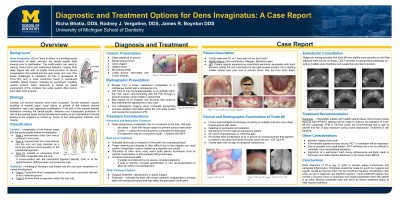
Dens invaginatus or “dens in dente” is a developmental malformation of teeth whereby the dental papilla folds inwards prior to calcification. This malformation can result in varying crown forms and anatomical features, ranging from deep lingual pits with no pulpal communication to severe invaginations that extend into the pulp cavity and root. This poses challenges to treatment. Dens invaginatus is most commonly found in permanent maxillary lateral incisors, followed by permanent maxillary central incisors. Early diagnosis is critical as pulpal involvement of the complex root canal system often occurs soon after tooth eruption. This case report details the diagnosis, evaluation, and treatment of a 10-year-old male patient who was referred to the University of Michigan Pediatric Dentistry Clinic with a chief complaint of pain to hot and cold foods and discharge of blood associated with tooth #9. Clinical examination revealed unique morphology of tooth #9, consisting of multiple cusp tips and a deep lingual groove with caries. Radiographic examination of tooth #9, including a CBCT scan, revealed no apical tissue pathology as well as multiple pulp chambers and canals that are interconnected. Diagnostic testing revealed that tooth #9 was slightly more sensitive to cold than adjacent teeth but did not linger. A diagnosis of reversible pulpitis is assigned. This report will discuss clinical and radiographic findings associated with dens invaginatus, the treatment rendered to our patient, and demonstrate how coordination of treatment with different dental specialties can help facilitate optimal patient care.