
.png)
Special Health Care Needs

Miranda L. Lommen-Mielke, DDS
Pediatric Dental Resident
Cincinnati Children’s Medical Center Hospital, Cincinnati, OH
Cincinnati Children's Hospital Medical Center
Cincinnati, Ohio, United States
Annmarie Matusak, DDS, DDS
Program Director
Cincinnati Childrens Hospital Medical Center (Cincinnati, OH)
Cincinnati Children's Hospital Medical Center
Cincinnati, Ohio, United States
Patrick T. Ruck, DDS
Cincinnati Children’s Medical Center Hospital, Cincinnati, OH
Sarat Thikkurissy, DDS, DDS, MS
Division Director/Research Mentor
Cincinnati Childrens Hospital Medical Center (Cincinnati, OH)
Cincinnati, Ohio, United States
Kerri Birkett, MS, CCLS, CIMI
Cincinnati Children’s Medical Center Hospital, Cincinnati, OH
Annmarie Matusak, DDS, DDS
Program Director
Cincinnati Childrens Hospital Medical Center (Cincinnati, OH)
Cincinnati Children's Hospital Medical Center
Cincinnati, Ohio, United States
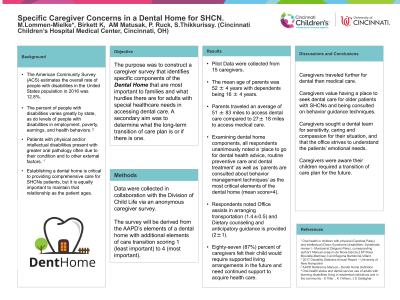
Purpose: The purpose is to construct and validate a caregiver survey that identifies components of the Dental Home most important to families and hurdles for adults with SHCNs in accessing dental care.
Methods: Data was collected in collaboration with the Division of Child Life via anonymous caregiver survey. Survey was derived from the AAPD’s elements of a dental home with elements of care transition scoring 1 (least important) to 4 (most important).
Results: Pilot Data was collected from 15 caregivers. The mean age of parents was 52 ± 4 years with dependents being 16 ± 4 years. Parents traveled an average of 51 ± 83 miles to access dental care compared to 27± 18 miles for medical care. Examining dental home components, respondents unanimously noted a ‘place to go for dental health advice, routine preventive care and dental treatment’ and ‘parents are consulted about behavior management techniques’ as the most critical elements of the dental home (mean=4). Respondents noted Office assists in arranging transportation (1.4±0.5) and Dietary counseling/Anticipatory guidance is provided (2±1). Eighty-seven percent of caregivers felt their child would require supported living arrangements in the future and continued support to acquire health care.
Conclusion: Caregivers traveled further for dental than medical care. Caregivers value having a place to seek dental care for older patients with SHCNs and being consulted on behavior guidance techniques. Caregivers sought a dental team for sensitivity, caring and compassion for their situation, and that the office strives to understand the patients’ emotional needs.