
.png)
Patient Management


Mashael A. AlHadlaq, BDS
Pediatric Dentistry Resident
Ministry of National Guard - Health Affairs
Ministry of National Guard - Health Affairs. Riyadh, Saudi Arabia
Riyadh, Ar Riyad, Saudi Arabia
Saad M. AlManea, BDS, SBPD, MMEd
Ministry of National Guard - Health Affairs
Riyadh, Ar Riyad, Saudi Arabia
Introduction: Myasthenia gravis (MG) is a rare autoimmune neurological disorder characterized by muscle weakness vary in severity from the mild form that affects ocular muscles only to the generalized form that affects other muscle groups. The prevalence of MG is 150–200 per million population. The etiology of MG is due to the blockage of neuromuscular transmission by circulating autoantibodies targeting mainly the nicotinic acetylcholine receptor (AChR) and associated proteins in the postsynaptic membrane of skeletal muscles. In MG patients, dental treatment is challenging due to the nature of the condition and its complexity.
Aim: To raise awareness about MG among dentists and discuss the dental management of the patients who have this disease and the precautions that should be taken.
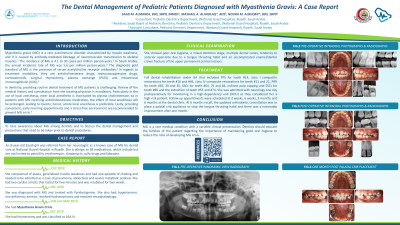
Case Report: An 8-year-old patient with MG and allergic to thirty-eight medications. Presented to the dental clinic with poor oral hygiene, multiple decayed teeth, and tongue thrust habit that led to anterior open-bite and uncomplicated crown fracture of the upper permanent central incisors. The decision was made to treat the patient under general anesthesia because of the complexity of medical condition and the extent of the dental treatment. In the process of preparing the patient for surgery, the patient was cleared from the treating physicians and was admitted under neurology care as per the primary physician. On the day of surgery, the patient received full-mouth dental rehabilitation under general anesthesia, including pulp therapy, crowns, restorations, and extractions. Furthermore, she was seen regularly in recall visits every three months.