
.png)
Patient Management

Christina Shih, DDS
Pediatric Dental Resident
Herman Ostrow School of Dentistry of USC
Herman Ostrow School of Dentistry of USC
Los Angeles, California, United States
Ami Gadhia, DDS
Herman Ostrow School of Dentistry of USC
Alexander Alcaraz, DMD
Program Director
Herman Ostrow School of Dentistry of USC, Los Angeles, CA
Los Angeles, California, United States
Brain tumors and their treatments often have significant neuropsychiatric effects. Mood, behavioral, or cognitive symptoms, collectively termed neuropsychiatric symptoms, may present similarly to mental health disorders. Neuropsychiatric effects may pose additional challenges for pediatric patients in terms of lifelong management.
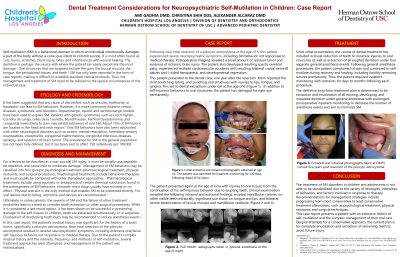
This case report discusses a male patient with history of pilocytic astrocytoma. Following resection of the tumor, the patient experienced severe neuropsychiatric symptoms, including self-mutilating behavior not responsive to medical therapy. This patient presented to the dental clinic, complaining of biting oral structures with injuries to lips, tongue, and gingiva. The course of dental treatment thus far has included extraction of all erupted dentition, completed three times under general anesthesia. The definitive long term treatment plan is determined to be enucleation of all developing dentition under general anesthesia with prolonged postoperative inpatient monitoring to decrease the number of anesthesia events and aim to minimize self-mutilation.